
Live
Shopify to SAP price sync, calculated by SAP
A B2B distributor's prices are calculated by SAP, customer by customer, at the moment of the request. Shopify stores prices statically and no off-the-shelf app could bridge the two. We built a custom Shopify app that calls SAP live, caches intelligently, and serves the correct price without slowing the storefront down.
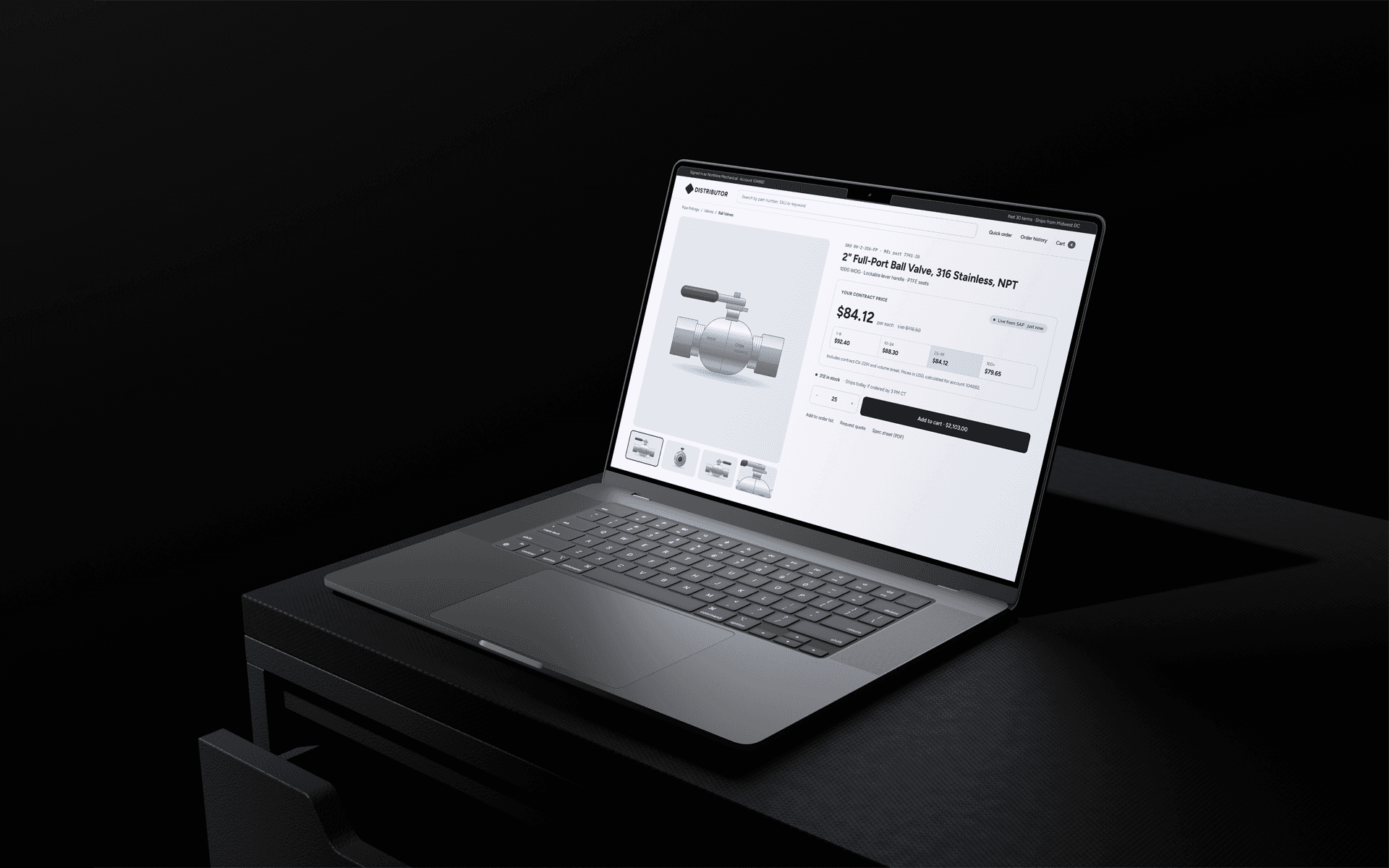
Shopify to SAP price sync, calculated by SAP
Change to the storefront experience
API calls, accurate prices without lag
Purpose-built app where no app existed
The client is a B2B distributor selling through Shopify to accounts that each hold their own negotiated terms. SAP is the system of record for pricing: contract rates, volume breaks, customer-specific agreements and currency logic all resolve inside the ERP, and they change continuously.
That makes a static price list meaningless. A price published to Shopify is a snapshot, and the moment SAP recalculates, the storefront is quoting something the business will not honour. The requirement was precise: every price a logged-in buyer sees must come from SAP, at request time, with no visible delay and no change to how the store looks or behaves.
Shopify is built to store a price. This business calculates one. Three constraints stood between the storefront and the ERP.
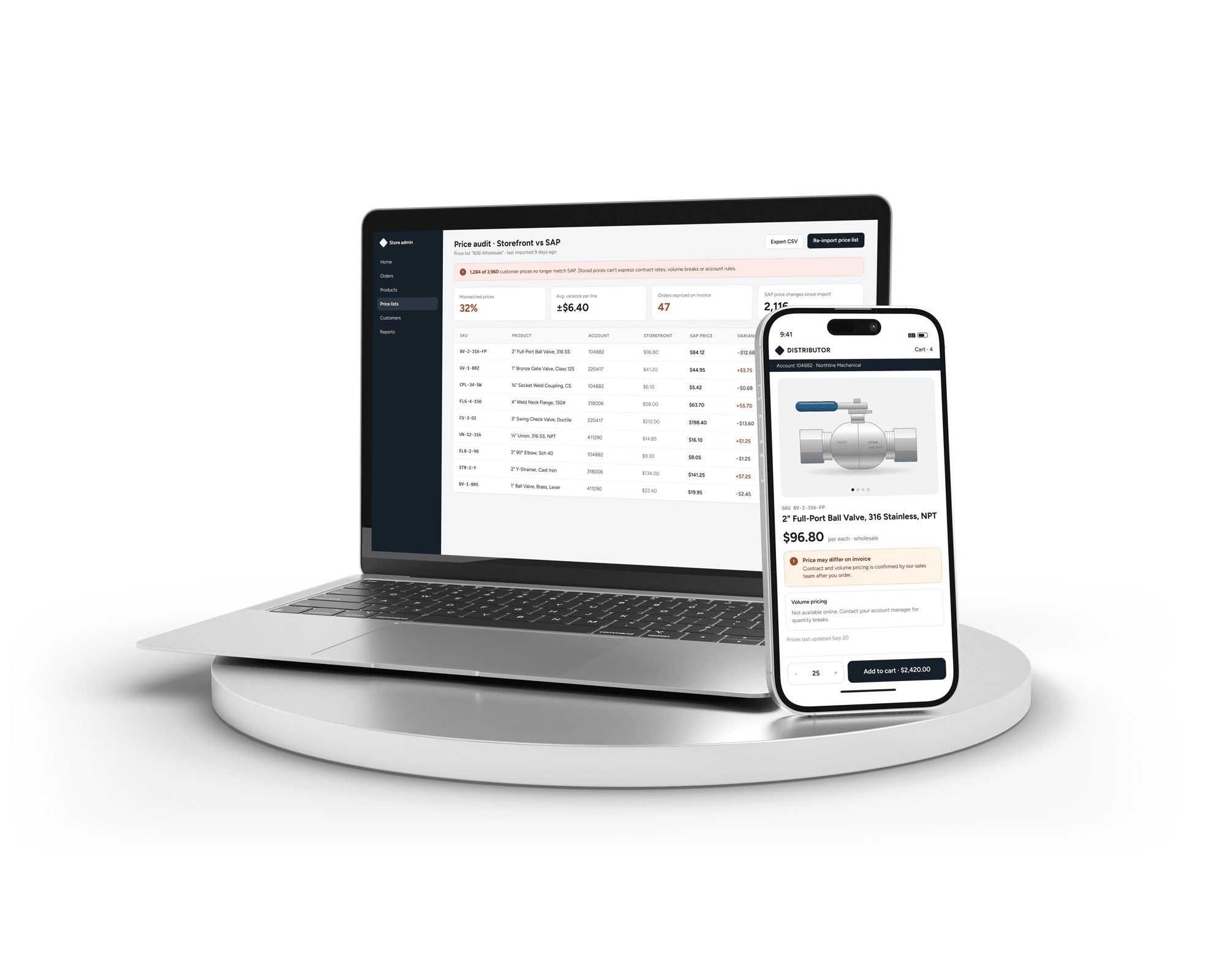
We have shipped Shopify integrations against enterprise systems of record, where the ERP stays authoritative and the storefront adapts.
Real-time pricing is only useful if the page still loads fast, so caching strategy was designed before the first API call was written.
App backend, database, caching layer and Liquid theme work handled by one team, with no handoff gaps between systems.
The complexity sits behind the scenes. Buyers see a normal Shopify store that happens to always be right.
We documented how SAP resolves a price, which inputs it needs, and which customer states the storefront has to represent.
A custom Shopify app with a caching layer, a database and a theme integration, built so SAP stays the single source of pricing truth while the storefront stays fast.
A direct line from Shopify to SAP. We built a custom Shopify app that connects directly to SAP and requests pricing at the moment it is needed. SAP keeps its logic, Shopify keeps its storefront, and the app translates between them on every request.
Fewer SAP calls, faster pages. A Redis caching layer holds recent pricing responses so repeat views do not hit SAP again. It cuts load on the ERP and keeps page speed where shoppers expect it, while staying short-lived enough that prices remain accurate.
A stable home for app data and configuration. PostgreSQL backs the app with persistent storage for configuration, account mapping and operational data, so behaviour can be tuned without redeploying and issues can be traced back through real records.
Live prices rendered in the store's own design. The pricing logic was integrated into the Shopify theme via Liquid, so SAP prices appear on product, collection and cart surfaces in the store's existing design. Nothing about the shopping experience changed.
Every price shown is calculated by SAP at request time, so the storefront and the ERP never disagree about what a customer pays.
Despite the complexity behind it, buyers see the same store they always did. The integration is invisible at the surface.
Redis absorbs repeat requests so SAP is called only when it needs to be, keeping pages fast and ERP load predictable.
A custom Shopify app bridges live SAP pricing to the storefront — GraphQL, Redis, PostgreSQL, and Liquid — because nothing off the shelf could do it.
If your ERP owns pricing, inventory or customer terms, Shopify can be made to respect it in real time. Tell us which systems you run and we will tell you what a live integration would take.
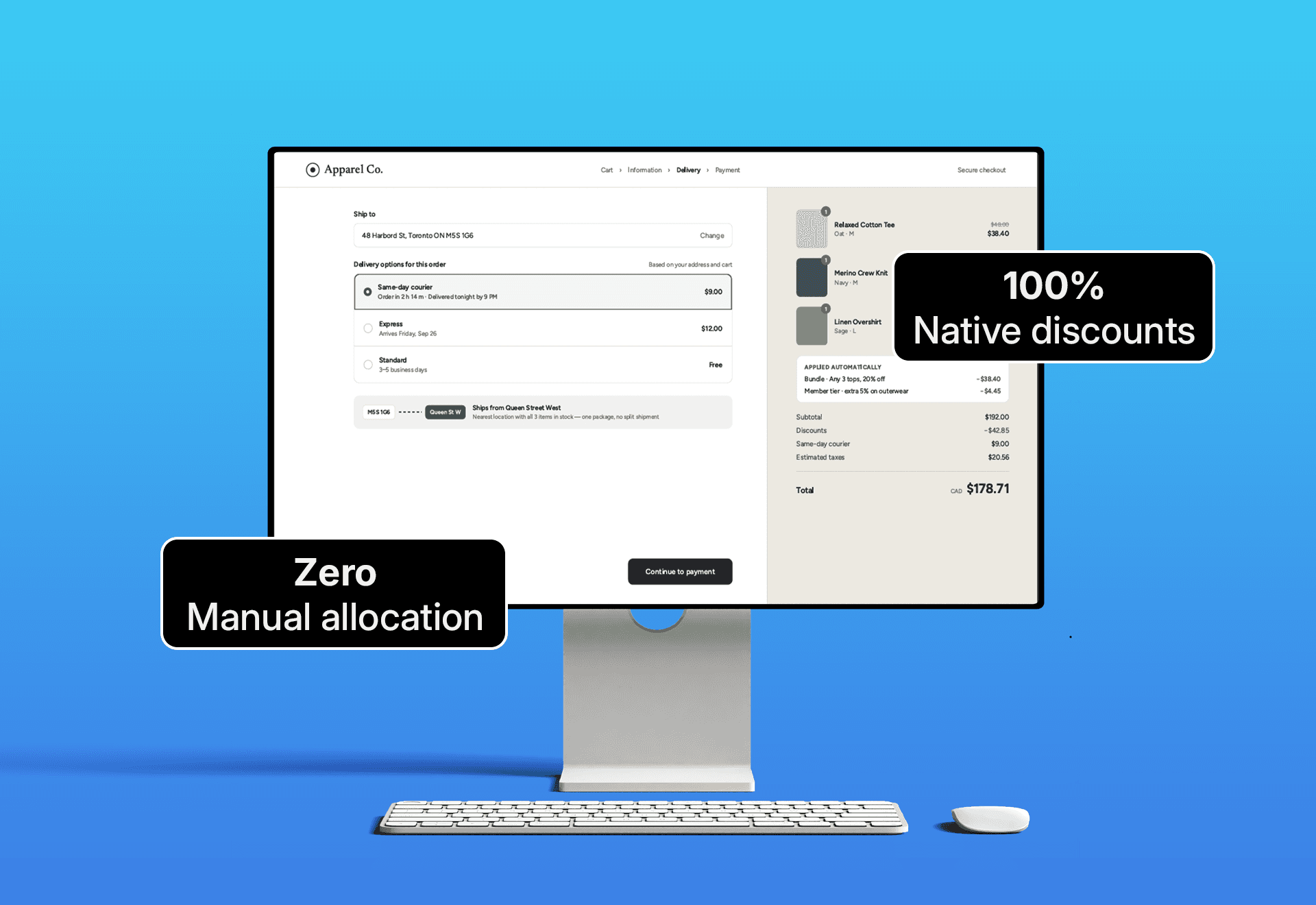
Four custom Shopify Functions and a Checkout UI Extension so discount, delivery, pickup, and fulfillment rules run natively.
Read case study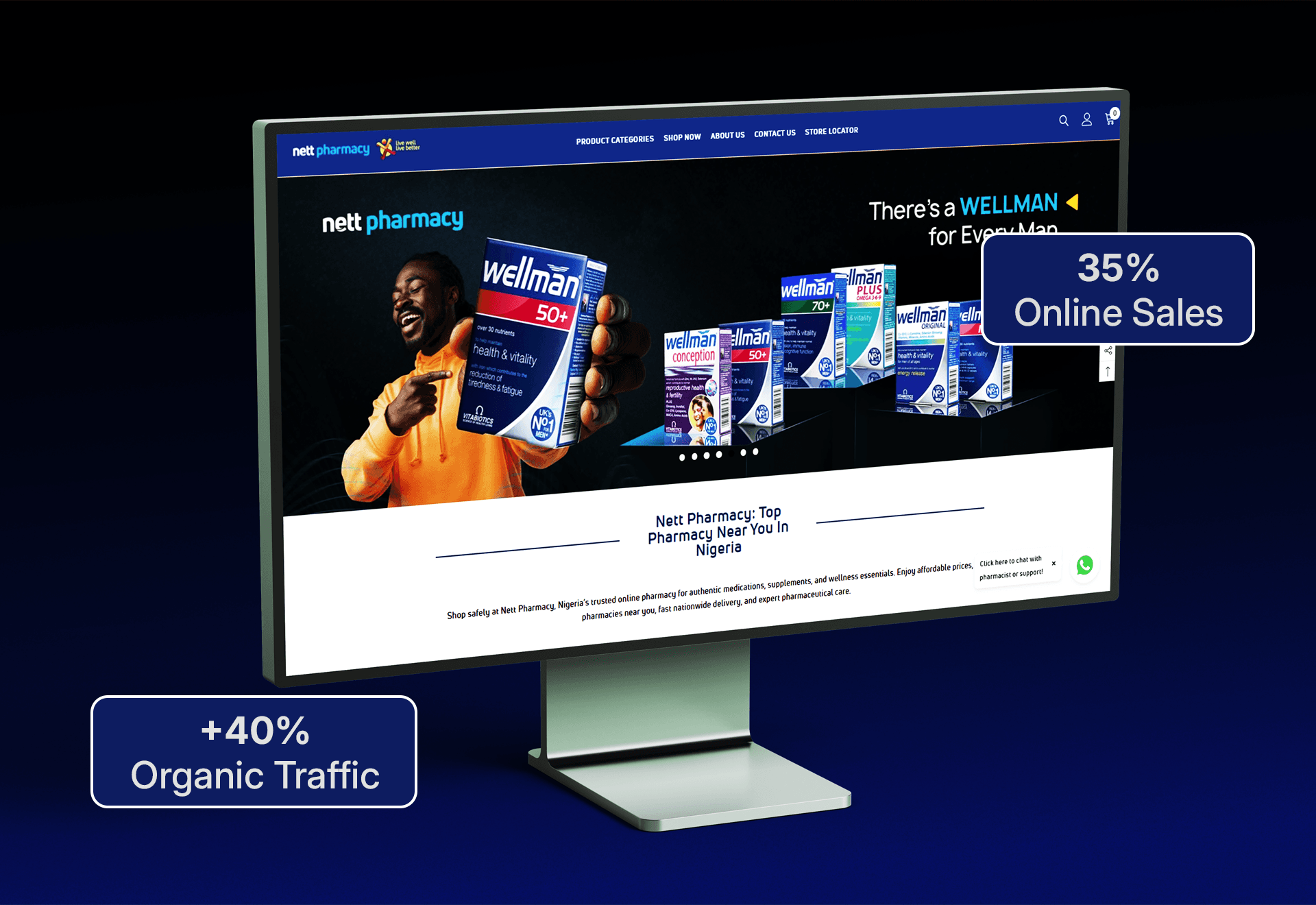
A scalable Shopify build for pharmaceutical and beauty retail with a 14,000+ SKU catalog and custom inventory sync.
Read case study
A custom bike rental platform with booking automation, inventory sync, and a centralized admin portal.
Read case study