
Why do some business websites generate consistent leads while others struggle to justify their cost? The difference is rarely the platform alone. Performance is shaped by strategic web design decisions, the right design trend adoption, and how professionally a site is built, supported, and maintained over time. As 2026 approaches, expectations around speed, trust, and usability are rising fast.
Businesses preparing for 2026 must focus on AI-powered web design, accessibility, personalization, and performance-driven layouts. Modern websites will prioritize UX, fast loading, micro-interactions, and scalable architecture. Strategic design trends, ongoing maintenance, and professional development choices will directly impact trust, conversions, and long-term digital growth.
Businesses that relied on shortcuts in 2025 are now facing limitations in scalability, accessibility, and personalization. Elements like layout structure, typography, color palette, and even how a logo is layered or displayed can directly affect credibility and conversion. Modern websites demand creative thinking, oversized visuals, refined overlays, micro-level polish, and increasingly AI-powered enhancements that improve user experience without overwhelming it.
Professional development also protects your investment. A new website may cost anywhere between $1,500 to $6,000, depending on scope, but without ongoing support and updates, even strong designs lose value quickly. Smart planning ensures your site evolves with user behavior, not against it.
This blog explores the most impactful web design trend shifts, design trends for 2026, accessibility standards, personalization strategies, and how AI fits into the future of digital growth—helping you prepare with clarity, confidence, and long-term results.
Web Design Trends 2026: Shaping Modern Business Websites’ Success
The Strategic Shift Behind Website Performance
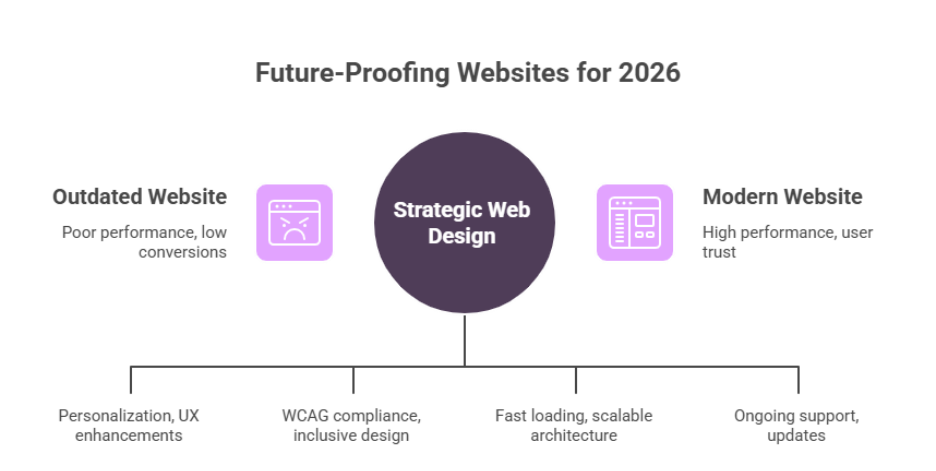
In 2026, web expectations are no longer driven by aesthetics alone. Website trends now focus on measurable performance, long-term scalability, and user trust. For small businesses, competing in a crowded digital landscape means aligning design with core web vitals, accessibility standards like WCAG, and clear business outcomes. This shift defines the most impactful design trends 2026 has introduced.
UX, Usability, and Structured Layouts
Designing for How Users Actually Behave
Modern success begins with ux and usability. Clean structured layouts, a consistent grid, and logical navigation reduce friction across all web pages. Visitors expect fast page load speeds, intuitive clickable elements, and focused calls-to-action, especially on landing pages. Ignoring these fundamentals often results in slow load times, lost trust, and missed conversions.
Visual Direction: From Minimalism to Maximalist Confidence
Making a Strong Visual Identity
The web design trends for 2026 reflect confidence and clarity. Some brands lean into minimalism, while others adopt maximalist expressions inspired by ’90s nostalgia and futurism. Oversized images, bold shape usage, and expressive design elements are paired with soft gradients, subtle gradient overlays, and even experimental accents like neon pinks, pastel colors, or controlled glitter effects. The key is consistency with your visual identity, not decoration for its own sake.
Typography, Fonts, and Content Hierarchy
Content-Led Digital Design
Strong font choices and readable typography guide attention and support content-based storytelling. In modern websites, typography is no longer secondary; it defines hierarchy, tone, and clarity in a noisy digital world. When paired with neutral color foundations or textured surfaces, it creates balance without overwhelming the user.
AI-Driven Personalization and Commerce
Smarter Experiences, Not Louder Ones
AI-driven interfaces are reshaping digital experiences, particularly for e-commerce. Thoughtful AI-driven logic enables dynamic product recommendations, adaptive layouts, and smarter personalization without sacrificing speed. These capabilities are now part of the top web design trends, especially for business websites seeking scalable growth.
Tools, Platforms, and Practical Execution
Beyond Templates
Relying solely on a rigid template limits flexibility. Modern design tools, platforms like Wix Studio, and experienced collaboration with a professional web designer allow brands to move faster while maintaining quality. Whether launching a new website or refining existing business websites, execution matters more than trends alone.
Preparing for What Comes Next
The future of web design is not about chasing every trend. It is about understanding how the year’s trends connect performance, accessibility, and creativity. Brands that shape 2026 and learn from evolving expectations will build modern websites that perform reliably, far removed from the limitations of dial-up thinking while staying relevant to audiences like Gen Z and beyond.
Conclusion
Preparing for website success in 2026 is no longer about following trends blindly; it is about making informed, strategic decisions that balance performance, usability, accessibility, and long-term growth. As expectations evolve, businesses that invest in professional web design, structured layouts, thoughtful UX, and scalable, AI-driven personalization will consistently outperform those relying on shortcuts or outdated approaches. From visual identity and typography to page speed, maintenance, and platform choice, every detail contributes to trust, conversions, and measurable business outcomes. The brands that act early will not only adapt to change but shape it, building digital experiences that remain relevant, reliable, and competitive well beyond 2026.
If your website needs to be future-ready, isn’t it time to ask why not discuss your next move with Integrity Studio?